Force-Free Training: What It Means and Why It Matters
Every caregiver on our team uses positive reinforcement exclusively. Here's the research behind that decision — and what it means for your dog day-to-day.
Every caregiver on our team is trained in and committed to force-free handling. This isn't a marketing position — it's an operational standard we enforce in hiring, training, and ongoing oversight. Understanding what it means in practice helps you evaluate any pet care provider, including us.
The Four Quadrants (Briefly)
Operant conditioning describes four ways to change behavior:
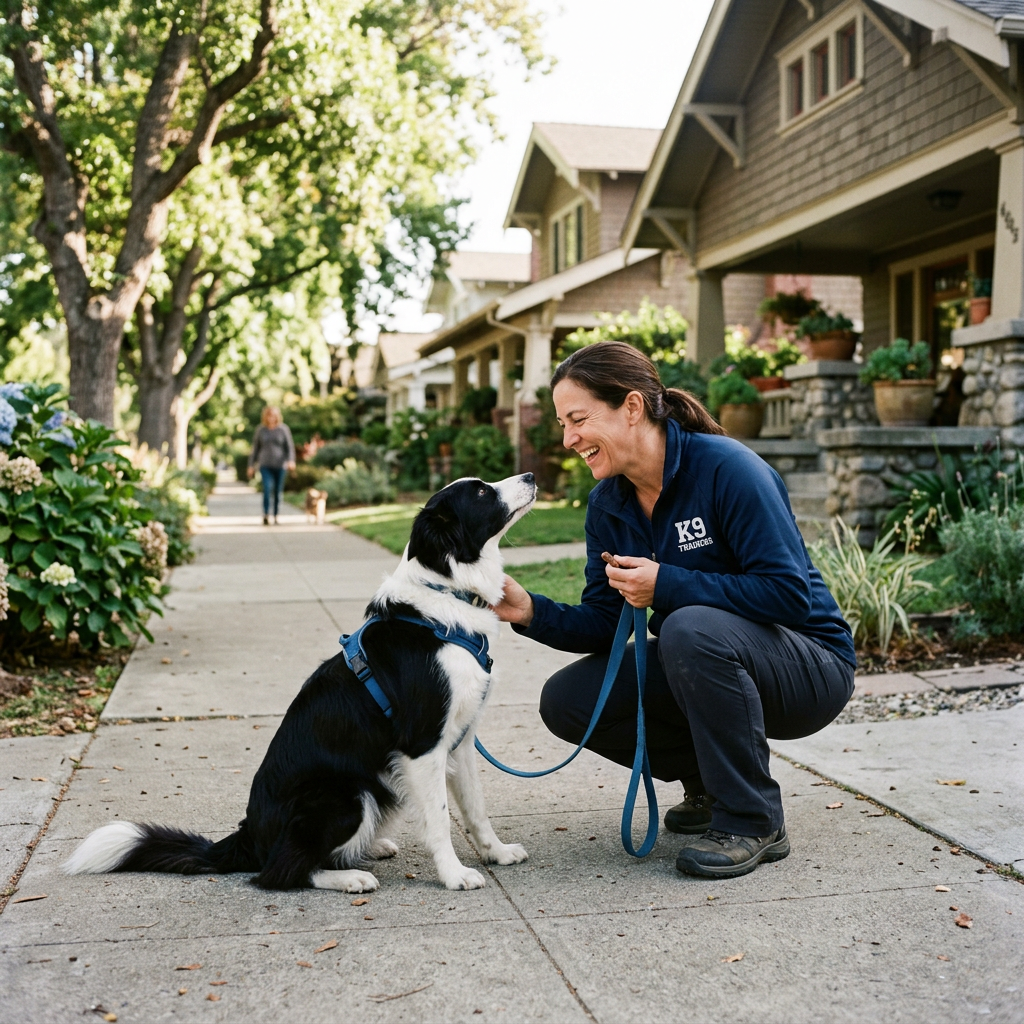
- Positive reinforcement: Add something good to increase behavior (treat for sit)
- Negative reinforcement: Remove something unpleasant to increase behavior (release pressure when dog sits)
- Positive punishment: Add something unpleasant to decrease behavior (leash correction for pulling)
- Negative punishment: Remove something good to decrease behavior (turn away when dog jumps)
Force-free training means primarily using positive reinforcement and, when needed, negative punishment — avoiding the application of pain, fear, or intimidation as training tools.
What the Research Shows
The evidence base against aversive training methods has grown substantially in the past decade. Studies consistently show:
- Dogs trained with aversive methods show higher cortisol levels during training sessions
- Aversive methods increase the frequency and intensity of aggressive behavior in dogs who are already prone to it
- Punishment-based corrections applied at the wrong moment (which happens constantly, even in professional hands) reinforce unintended behaviors
- Positive reinforcement training produces equivalent or superior compliance in controlled studies, with significantly lower stress markers
You can train almost any behavior without pain. The question isn't whether it's possible — it's whether you're willing to invest the time required.
What Force-Free Looks Like on a Walk
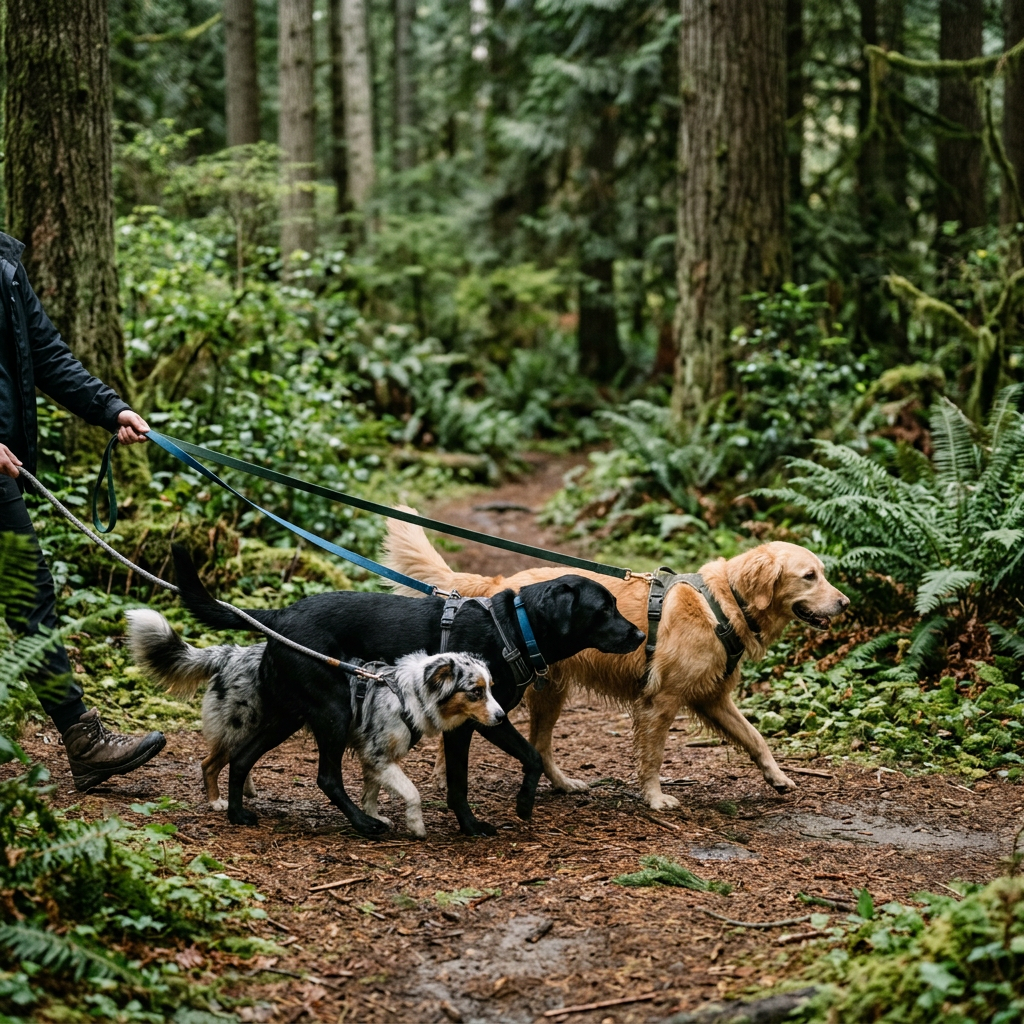
On a walk, force-free handling means:
- No choke chains, prong collars, or e-collars
- Loose-leash walking taught through stop-start mechanics and reward delivery, not leash corrections
- Reactive behavior managed through distance, redirection, and counter-conditioning — not collar pressure
- A dog who is given agency to sniff, investigate, and pace the walk according to their energy level
Force-free handling doesn't mean permissive. A dog who's pulling into traffic is redirected firmly. A dog who is resource-guarding is managed safely. The difference is that the tools used are distance, body position, attention redirection, and reward — not pain or threat.
Why This Matters When You're Not There
You are not on the walk with your dog. You're trusting another person to make hundreds of small decisions about how to handle your dog in the real world. The method they use when your dog sees a squirrel, when another dog lunges, when your dog freezes on a corner — these decisions happen outside your view. Knowing that your caregiver's default is reinforcement, not punishment, matters more when you aren't watching than when you are.
We audit this through caregiver notes, GPS routes, and regular check-ins. But the foundation is hiring people who have internalized these methods as a value, not a rule to follow when observed.